When stepping into the realm of corporate portraiture, many photographers overcomplicate their gear, believing that an elaborate studio setup is mandatory. In reality, mastering professional results often begins with stripping away excess.
Veteran photographer Gary Hughes demonstrates that incredible depth, accurate color temperature, and flattering facial contouring can be achieved using nothing more than a single speedlite and environmental awareness.
10/24/2026
Photographing modern electronics like an iPad while keeping the screen vividly illuminated presents a unique metr...
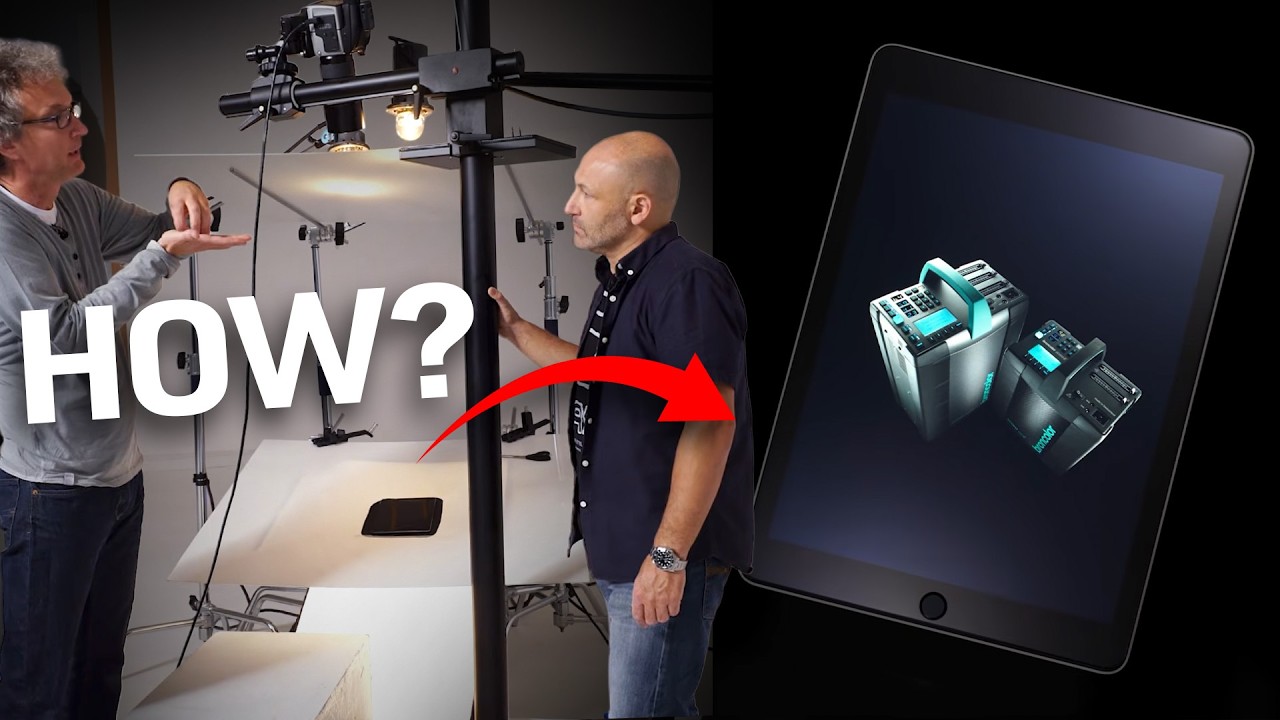
Photographing modern electronics like an iPad while keeping the screen vividly illuminated presents a unique metrological challenge. Controlling reflections on a completely flat, glossy surface requires precise geometry rather than arbitrary light placement.
By positioning the camera high above the subject with a long focal length lens, the angle of incidence is strictly constrained, successfully preventing the studio setup from reflecting directly in the glass.
10/19/2026
Putting a new mobile sensor through its paces in the harsh dust of the Mojave Desert offers an uncompromising tes...
Putting a new mobile sensor through its paces in the harsh dust of the Mojave Desert offers an uncompromising test of photographic limits. Tyler Stalman takes the latest Apple flagship straight into the heart of Wasteland Weekend to evaluate its real-world capabilities, pushing past typical reviewer benchmarks to see how computational photography and variable optics hold up against extreme environments.
10/18/2026
While leading a street photography tour through Morocco, Sean Tucker found himself continually d...
While leading a street photography tour through Morocco, Sean Tucker found himself continually drawn to stray cats. Although a quiet voice questioned whether photographing animals was serious enough for a professional artist, the experience sparked a profound reflection on how easily creators trade personal joy for external validation.
10/15/2026
High key photography looks effortless: a bright, clean image, a pure white background, a subject that seems to float in lig...
High key photography looks effortless: a bright, clean image, a pure white background, a subject that seems to float in light. But that simplicity is deceptive. Push the exposure too far and you lose detail in the skin and edges; hold back and the "white" background turns a dull grey.
10/11/2026
Product Photography · Karl Taylor · Visual Education You’re Not Lighting the Metal — Y...
Product Photography · Karl Taylor · Visual Education
You’re Not Lighting the Metal — You’re Lighting What It Reflects
Instructor Karl Taylor
Channel Visual Education
Subject Reflective Metal
Key Modifier Overhead Scrim + Mirror
Verdict ★ Must Watch
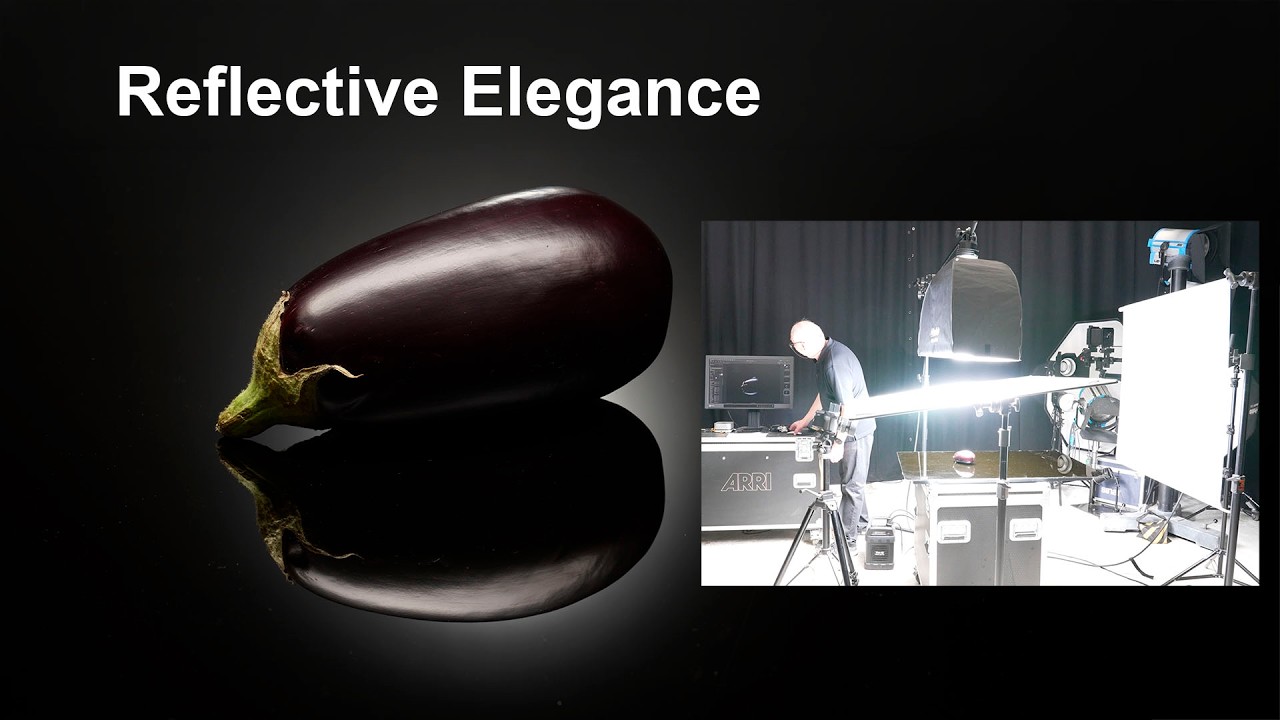
Photographing shiny metal is rarely about lighting the physical object itself — it is an exercise in controlling what that surface reflects. When tackling highly reflective subjects like polished golf clubs, traditional lighting rules fall short. The secret lies not in adding more power, but in managing gradients and reflections with surgical precision to reveal the true form of the product.
Curved, highly polished surfaces like golf club heads and shafts behave like mirrors: they show the entire studio back to the camera. Every softbox edge, every ceiling tile, every stray shadow becomes part of the final image. This is why the conventional approach — aim a light at the subject and check the histogram — completely breaks down with reflective metal. You are not illuminating the club. You are designing what the club sees.
01 /
The Scrim Is Your Primary Tool
Large overhead scrims form the backbone of Karl’s setup. Positioned above the subject, a scrim diffuses the strobe into a wide, even field of light that wraps gently around curved metal surfaces. Unlike a softbox — which has a finite, defined shape that appears as a bright rectangle in every reflection — a scrim creates a broader, more controllable luminous field that can be precisely shaped using flags and cutters.
A simple mirror often outperforms a powerful softbox when refining reflections along a shaft. Intelligent redirection of existing light beats brute illumination every single time.
The distance between the scrim and the subject matters enormously. Bringing the scrim closer intensifies the highlight while softening its edges; moving it further away produces a more defined, harder gradient. This variable alone gives the photographer a remarkable degree of tonal control without changing the light source or its power at all.
02 /
Three Core Techniques for Reflective Metal
TECHNIQUE 01
Overhead Scrim for Gradient Control
Primary Setup
Position a large scrim above the subject to create a wide, even luminous field. Adjust height to control highlight intensity and edge softness. Use flags to cut light from areas causing unwanted reflections.
TECHNIQUE 02
Mirrors for Shaft Reflections
Reflection Control
Rather than adding a new light source, place a small mirror to redirect the existing scrim light into the shaft. This mirrors the gradient already established, keeping highlights natural and consistent across the whole club.
TECHNIQUE 03
Light Each Club Individually
Complex Sets
When photographing multiple clubs together, light and shoot each one separately, then composite in post. Trying to light three reflective objects simultaneously creates uncontrollable cross-reflections.
03 /
Mastering Reflections & Gradients
Building light from scratch on complex metallic surfaces demands a fundamental shift in mindset. You are not thinking about where to point a light — you are thinking about what shape of reflection will appear on the surface, and whether that shape communicates the product’s form, curvature, and quality. A clean tonal gradient running from bright to dark along a shaft signals depth and three-dimensionality. A harsh, irregular highlight signals an uncontrolled studio.
Flags and black cards play an equally important role as light sources. Placing a black flag beside a reflective surface causes it to reflect darkness — giving the metal a defined edge and preventing it from merging visually with a bright background. This technique of “adding black” is counterintuitive to photographers used to chasing maximum light, but it is essential for making polished metal read as genuinely three-dimensional.
Pro Tip
When dealing with stubborn reflections on metal, look for ways to mirror existing gradients rather than introducing new light sources. Adding a second strobe to fix a problem area almost always creates two new problems. Instead, redirect the light already present using a small mirror or white card — it keeps your highlights clean, natural, and consistent with the rest of the setup.
04 /
Focus Stacking for Complete Sharpness
Golf clubs present an additional challenge beyond reflections: their length makes it physically impossible to get the entire club sharp at the apertures required for clean studio work. Karl’s solution is focus stacking — shooting multiple frames focused at different points along the club, then combining them in post-production. The result is end-to-end sharpness that no single frame could achieve, while retaining the clean, gradient-controlled lighting established in the studio.
Key Takeaways from Karl Taylor
→Think in reflections, not sources: Before placing any light, ask what the metal surface will reflect at that position. You are designing the reflection, not the illumination.
→Scrims over softboxes: For curved metal, a large overhead scrim creates a more controllable and naturalistic light field than a softbox whose edges will appear directly in every reflection.
→Use mirrors, not more power: When a shaft or curved surface needs a highlight boost, redirect existing light with a small mirror rather than introducing a new strobe. Keeps gradients consistent.
→Black is a tool: Flags and black cards subtract light and create defined edges on reflective surfaces. Use them as actively as you use your modifiers.
→Composite for complex sets: On multi-product sets with reflective items, light and shoot each object individually and composite the results rather than trying to solve every reflection in one frame.
→Focus stack for full sharpness: Long or irregular products need multiple focus points. Stack frames in post to achieve sharpness from tip to toe without sacrificing aperture control.
Subject
Reflective Metal — Polished Golf Clubs
Key Modifier
Overhead Scrim (large format)
Secondary Tool
Small Mirror for Shaft Reflections
Core Technique
Reflection & Gradient Control
Post-Production
Focus Stacking for Full Depth of Field
Channel
Visual Education (Karl Taylor)
Karl Taylor / Visual Education — Key Takeaway
Stop Lighting the Object. Start Designing the Reflection.
Karl Taylor’s golf club shoot is a masterclass in the fundamental principle of reflective product photography: you are never really lighting the object. You are curating the environment the object reflects. Every modifier, every flag, every mirror is a deliberate decision about what the polished metal will show the camera.
Once that mental model clicks, the whole approach changes. Problems stop being “my light isn’t bright enough” and become “what is this surface reflecting right now, and how do I change it?” That shift in thinking — from illumination to reflection design — is worth more than any new piece of gear in the studio.
Studio lighting has a reputation for being complicated: light stands everywhere, a pile of modifiers and ratios that seem to require a calculator. But most lighting problems in portraits don't come from the gear. They come from where the light is placed.
10/08/2026
Midday sun is usually the enemy of moody portraits. With the right flash technique, it becomes your blank canvas. Hard n...
Midday sun is usually the enemy of moody portraits. With the right flash technique, it becomes your blank canvas.
Hard noon light is flat, bright and unforgiving. But if you can push the ambient exposure down far enough, the sky and background fall into darkness and your flash becomes the only light that matters. The result looks like a night scene or a studio set, shot in broad daylight.
10/06/2026
Put a dark subject on a dark background and the usual result is mud. The tones merge, the edges disappear, and the object lose...
Put a dark subject on a dark background and the usual result is mud. The tones merge, the edges disappear, and the object loses its shape. Turning up the power doesn't fix it. What fixes it is deciding exactly where the light goes, and where it doesn't.
This setup does that with two lights: a softened key overhead for the highlights, and a hidden light behind the subject that builds a soft gradient to carve the edges out of the black.
10/04/2026
What if you could change the lighting of a photograph after the shoot is over? Photoshop Beta's new gen...
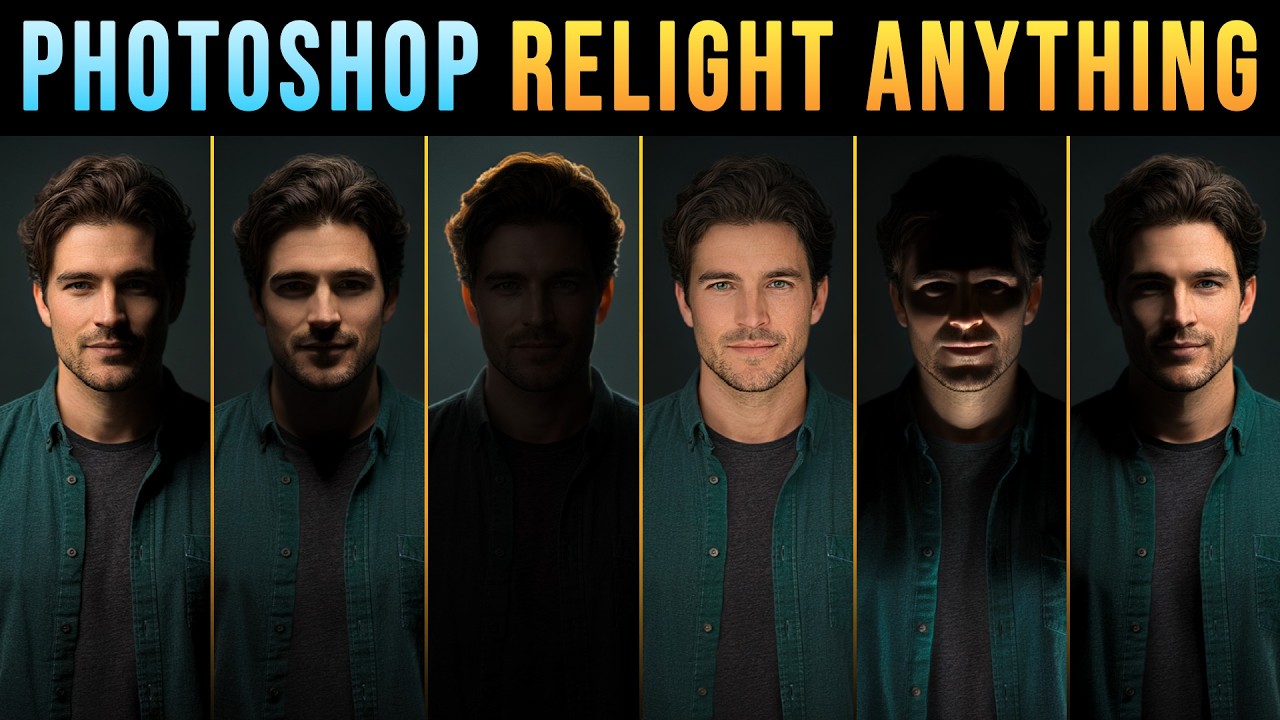
What if you could change the lighting of a photograph after the shoot is over? Photoshop Beta's new generative Relight feature gets surprisingly close. It removes the light already in the image and lets you build a new setup from scratch, so a flat window-lit portrait can become a moody, rim-lit one without a single dodge-and-burn pass.
Traditional retouching can only reshape the light a photo already contains. Dodge and burn, curves and selective color grading all redistribute existing illumination. Relight does something different: it recalculates highlights, contact shadows and depth around your subject according to lights you place yourself.
My name is Matt, I am photographer and "BTS search Guru".
On ISO 1200 Magazine we have the best team searching brand new behind the scenes videos around the world to learn all the secrets of the best photographers
This website is for educational purpose.
We attribute images, videos, and texts to their creators and original sources. If you have some reason to believe we must remove content, please contact me.













SOCIAL MEDIA